Inspired by Community Tourism Day, Professor Anna de Jong from the University of Glasgow celebrates a powerful example of community-led tourism on Canna and how it can sustain island communities and populations.
Tourism as a catalyst for community-led development
Community-led tourism takes many forms, and attempting to understand these variations and how they are supported by governance and policy is something that we are looking at as part of the European Research Council JUST TOUR project . In celebrating Community Tourism Day on April 26th, JUST TOUR has been reflecting on the different ways each of these unique forms enable communities to retain power and develop place on their own terms.
In this blog post, we look at the Isle of Canna – the furthest west of the Small Isles, forming part of the Inner Hebrides. Canna hosts a community of less than 20 residents. Whilst small, this is a group of innovative, skilled and creative individuals who are deeply committed to the continuous development of the island, particularly through The Isle of Canna Community Development Trust (IoCCDT).
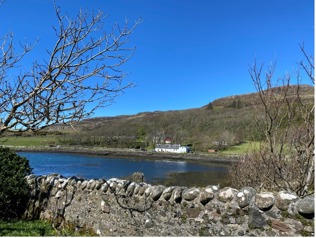
Canna presents an interesting case in terms of community-led development, as it hasn’t undertaken a community buy out of Canna land or any of its assets. Rather, the island was gifted to the National Trust for Scotland (NTS) in 1981, with the NTS serving as the long-term steward. The NTS currently actively supports the IoCCDT to take on decision making and run local services and businesses.
This delegated community management model is viewed by the IoCCDT as reducing the responsibilities and pressures that might come through ownership whilst placing decision making power with the community. It is reliant though on an ongoing symbiotic relationship between NTS and IoCCDT.
Tourism here is carefully managed by the IoCCDT to bring employment and revenue opportunities to the island, with the ultimate aim being to stimulate sustainable demographic growth.
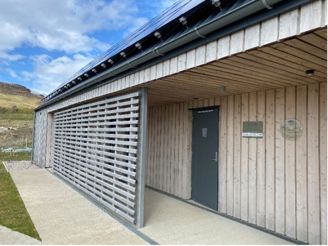
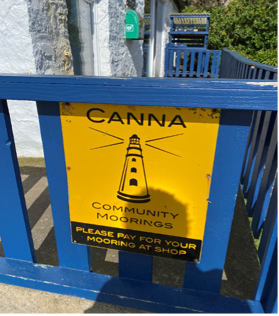
To support this approach, IoCCDT run several enterprises and activities, including a community shop, community moorings, Canna Renewable Energy and Electric Limited (CREEL), and a recently opened Visitor Hub, which provides facilities for those visiting the island.
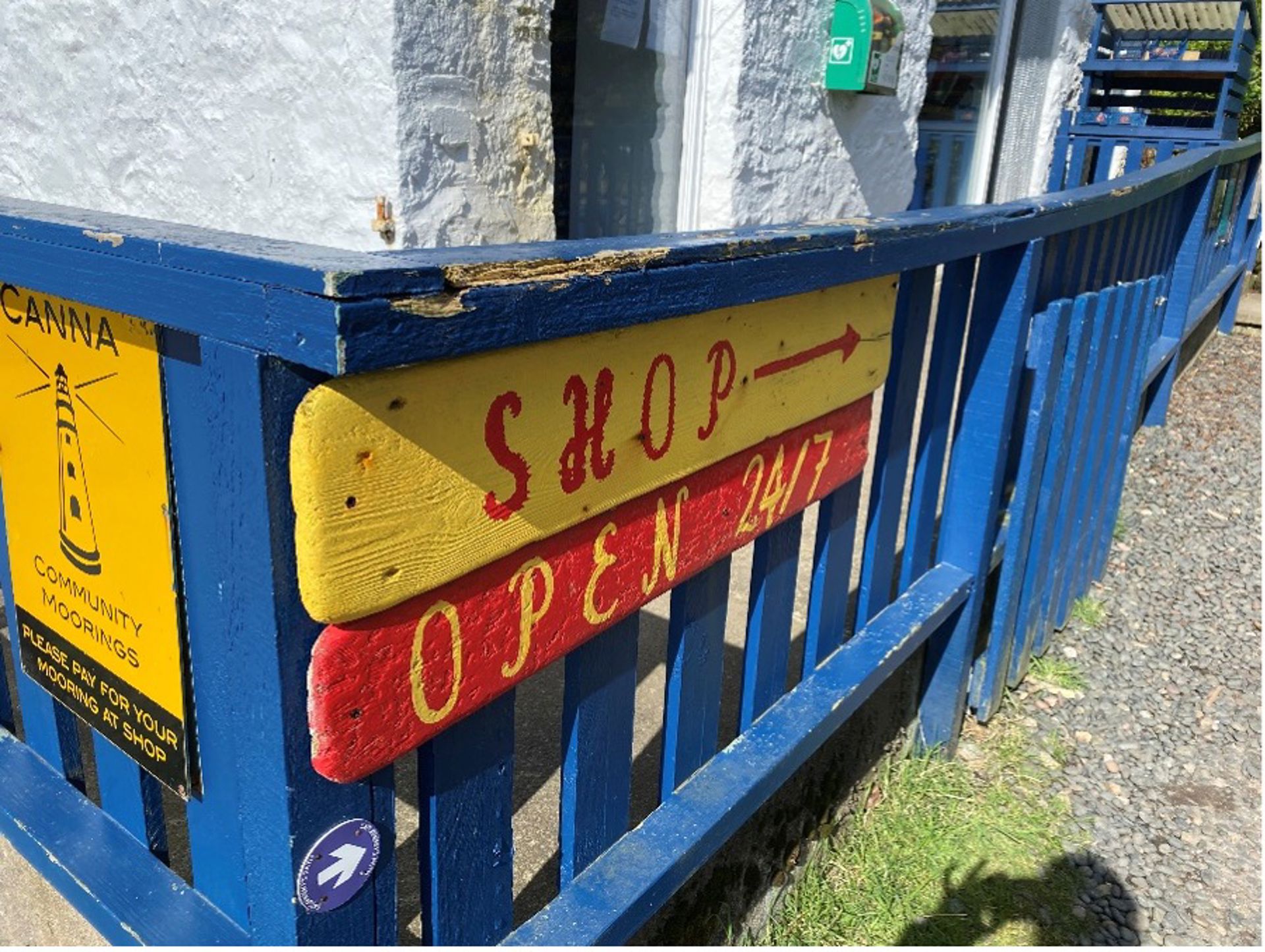
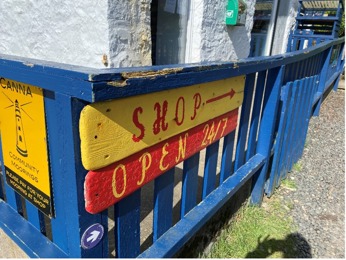
Each of these enterprises presents a unique and creative example of what can be achieved in an island community. The community shop, for instance, is open 24/7 and works on an honesty system, so as to ensure that food and essential items are available anytime of the day, without the need to manage staffing capacity and staff cost within the small community.
The community shop also serves as a space for local crafters and makers to showcase and sell products to visitors, whilst the repurposed Shearing Shed serves as a non-commercial warm and welcoming community space allowing folk to come together, particularly when it is cold and wet outside.
Importantly, the IoCCDT is conscious not to become too dependent on tourism. Tourism, whilst key, is just one of the island’s economic activities, and needs to work alongside and complement Canna Farm, Canna Café, and the NTS’s conservation of Canna House and the environment.
The IoCCDT also remains reflective in terms of tourism growth and its effects on Canna’s culture and environment. There are many touristic opportunities on the island, but any additional entrepreneurial activity is viewed through the lens of facilitating sustainable demographic growth.
Tourism is perceived to have been very successful in recent years, and there is a cautiousness at this moment to not move forward too quickly with additional opportunities.
The community itself also must ensure that they have the capacity within the community to sustain any additional activities. Many of the islanders already joke that they wear many different hats and take on many different jobs – with part of the Canna culture being about a willingness to muck in and contribute to the island’s development.
As such, ensuring that the community is sustained includes recognising the need to not over burden residents, to maintain this unique community willingness.
Ultimately, community-led tourism on Canna is about what is needed in sustaining the unique culture, environment and way of life on the island. It is about centring residents and place, and utilising that centrality to consider the economic activities that are pursued.
Given Canna’s unique landscape and geographical positioning, tourism serves as a valuable catalyst. But it remains just that — a catalyst to be utilised to sustain what is there and respond to challenges like population, rather than an industry to generate economic growth in and of itself.
JUST TOUR is a European Research Council project examining resident experiences in regions where tourism forms a significant aspect of the economy, as well as exploring the informal and formal mechanisms available to residents to contribute to tourism decision making processes in these regions.
We are looking at three regions across Europe: Lochaber, UK; Tenerife, Spain and Gotland, Sweden. To find out more about the project and get involved in our activities, join our JUST TOUR Network .

Professor Anna de Jong, Professor in Tourism and Regional Development, School of Social and Environmental Sustainability, University of Glasgow
Do you want to be a SCOTO Networker, Supporter or Enterprise?
Find out more about how you can join SCOTO