Visitor Levy Bill Image

Visitor Information Centres

A Community Warm Welcome
Across Scotland, many local communities are stepping up to deliver vital visitor information services, filling the gaps left by the closure of VisitScotland's tourist offices.

Whether through dedicated hubs or integrated local services, communities are creating welcoming spaces, highlighting the best of their areas, and connecting visitors directly with local people.

If your community is considering providing visitor information, we have
set out some key aspects worth considering, and have some case study examples from our network. 

If you have any information which could be useful for the Network, or you feel that something is missing, please email info@scoto.co.uk.

Models of Community Run Visitor Information Centres
Case Studies

SCOTO Communities across Scotland provide information for visitors in a variety of ways, sometimes as a dedicated service and sometimes as part of another service/facility. 

Some of these are commercially self-sustaining, and others are provided completely voluntarily with local people doing rotas who are keen to welcome visitors and help them get the most out of their visit. 

Each operation is different, and thanks to these VICs, we have several case studies to inspire and inform any community considering visitor information provision in their local area and keen to understand how others do it. You can read the Case Studies here >

Through our partners we are able to facilitate and fund learning exchanges so if this is something you are seriously looking at and seeing something first hand would help your thinking, then do please reach out and we can scope this out with you. info@scoto.co.uk

LOCATION, LOCATION, LOCATION

Choose an easy-to-find location, preferably in a central area frequented by tourists, such as near popular attractions, transport hubs, or town centres.

You still need to consider your VIC's visibility. Ensure the centre is well-signposted, have an A-frame outside (if allowed by your local council), or even have signposts from local train and bus stations.

If you have found a perfect location but need help with the purchasing of the building then there is help from a number of organisations including: Community Land Scotland, Community Enterprise, DTAS and Scottish Community Alliance.

You can also try your Council who might have Town Centre Development Manager.

Staffing
How will you run the VIC?

We found many different ways of running a VIC. Some were fully staffed, some were a mix of staff and volunteers, and many were run entirely by volunteers.


There is no correct version, but here are some points which we have learnt:


1.Volunteers bring passion and local knowledge.

2. Provide training on customer service, local history, and attractions. Familiarity with multiple languages can be beneficial but not essential.

3. Hold briefings or send out regular updates to keep everyone informed about changes, new developments, or upcoming events. This forms a sense of teamwork and ensures that all staff and volunteers are well-prepared.

4. Have shifts for volunteers which can be shorter and more flexible - Callender VIC have 2 hour volunteer shifts.

5. Have a local information folder for staff and volunteers, as not everyone will be updated on everything happening in the area. This could also include accommodations, attractions, and other VICs in the next region.

6. While not everyone enjoyed wearing a uniform at school, even a simple badge or t-shirt can make a big difference. It helps visitors easily identify who they can approach for help and enhances the overall professionalism of the centre. Providing staff and volunteers with recognisable attire also fosters a sense of belonging and pride, reinforcing that they are valued members of the team.

7. Regularly acknowledge the contributions of both volunteers and paid staff and simple gestures like thank-you notes, small rewards, or volunteer appreciation events can go a long way in maintaining enthusiasm.

8. Have an end-of-year feedback session where everyone can feel comfortable providing feedback on their experience. What have visitors been asking for? What have they been buying? This can lead to improvements in how the centre is run and help everyone feel more invested in the centre’s success.

Funding and Budgeting
Make sure you have thought about all the initial setup costs.

Plan for costs related to securing premises, furnishing, signage, and initial stock (maps, brochures, merchandise) and then ongoing expenses of utilities, salaries, maintenance, marketing, and replenishing stock. Insurance and accountancy costs are very important and should be included even if you are a voluntary organisation.

Many of the VICs we spoke to had a number of income streams which allowed them to be more sustainable. This included:


1. Selling merchandise - Discover Cullen Tourist Information Centre has an online shop which sells throughout the year and supports their summer services and event.


2. Lochness Hub & Travel have a number of services from tours to baggage transfer services as well as electric bike hire and merchanise.


3. Callander Visitor Centre has holiday accommodation above its Centre, which contributes to its running costs alongside its VIC merchandise.


4. Bùth Bharraigh is a shop on Barra, so providing VIC services is not its main role, but the two work well together as many visitors use the shop as their first step on the Island when coming off the ferry.

Many of the VICs were also supported by local Trust and business associations.


Income Generation Notes:


 • Retail: The main income source for most hubs.


• Girvan: £7.5k sales this season from local arts/crafts (20% commission).


• Helensburgh: Uses a pro forma system to pay makers upfront, balancing lower-margin artisan goods with higher-margin mass-produced items to manage risk.


• Cullen: Uses a 15% commission on arts & crafts sales, with plans to increase to 20% to align with Girvan's rate.


Services Offered

Generating income allows Visitor Information Centres (VICs) to be financially sustainable—helping cover core running costs, pay for staff, and fund local community projects. Here are several practical revenue streams used across our network:

1. Retail & Merchandise: Most VICs stock local crafts, books, maps, and unique souvenirs. Choose items that aren't available in nearby shops to avoid competing with other local businesses. SCOTO Networkers have said that maps and books are reliable bestsellers as well as local crafts & arts.

2. Ticketing & Booking Services: Partner with local operators to book tours, accommodation, or attraction tickets in exchange for a small commission.

3. Luggage Transfers: Lochness Hub & Travel run a luggage transfer operation for those walking on the near by Great Glen Trail. The mini bus also supports the local community with delivery of school meals. 

4. Luggage Storage: Providing temporary baggage storage solves a major pain point for travelers. Just ensure your venue meets local security and insurance requirements.

5. Wi-Fi & Charging Hubs: Free Wi-Fi brings people through the door. Consider adding key-locked charging boxes where visitors can safely charge phones or laptops for a small fee.

6. Tailored Amenities: Think about small touches that serve your local environment. Bùth Bharraigh, for instance, provides a "beach library" with buckets and spades for visiting families to borrow.

VIC's Online

The most successful VICs have created a website and maintain active social media profiles to reach a broader audience. This is particularly useful if you close after the summer season, as it allows you to provide information all year round.

1. Promote your VIC through local media, and by partnering with local businesses, accommodation providers, and attractions.

2. Participate in community events where visitors gather, such as the local Highland Games.

3. Reach out to tour operators that visit your area to let them know your team is ready to welcome their groups.

4. For example, Girvan Tourist Information uses volunteer ambassadors who walk around the area, sharing information with both visitors and locals.

5. Additionally, Discover Cullen runs an online shop—a great way to generate income and keep your destination top of mind throughout the year.

Tech & Systems


At a recent SCOTO Online Gathering, members discussed one of the most practical operational decisions facing community-led Visitor Information Centres: choosing the right Point of Sale (POS) and card payment system.


Selecting a payment setup depends on your venue's budget, whether you sell merchandise, and if you need mobile payments for pop-up events. Here is a breakdown of what systems SCOTO network members currently use and their real-world experiences:


Shopify: Recommended by Helensburgh.


Best for: All-in-one shop and inventory management.


Why it works: Offers a fully integrated POS system that seamlessly connects in-store sales, online stock tracking, inventory control, and accounting features.


SumUp: Used by Girvan and Cullen.


Best for: Simple, low-cost card transactions.


Why it works: Great for standalone card payments. Cullen uses a basic model paired with manual stock tracking. However, venues considering SumUp should keep transaction fee structures in mind as sales volume grows.


SumUp Light: Used by Girvan.


Best for: Basic in-store stock control.


Key takeaway: While useful for fixed counter checkout, note that it does not automatically sync inventory with handheld machines used at outdoor events or pop-up locations.


Remember

If you sell multiple retail items or run an online shop: An integrated system like Shopify simplifies accounting and keeps stock levels accurate automatically.


If you only take occasional payments or operate on a tight budget: A simple card reader like SumUp offers a low barrier to entry, provided you are comfortable tracking inventory manually.


If you attend outside events or Highland Games: Double-check whether your main in-store setup syncs with mobile handheld devices to avoid inventory mismatches.
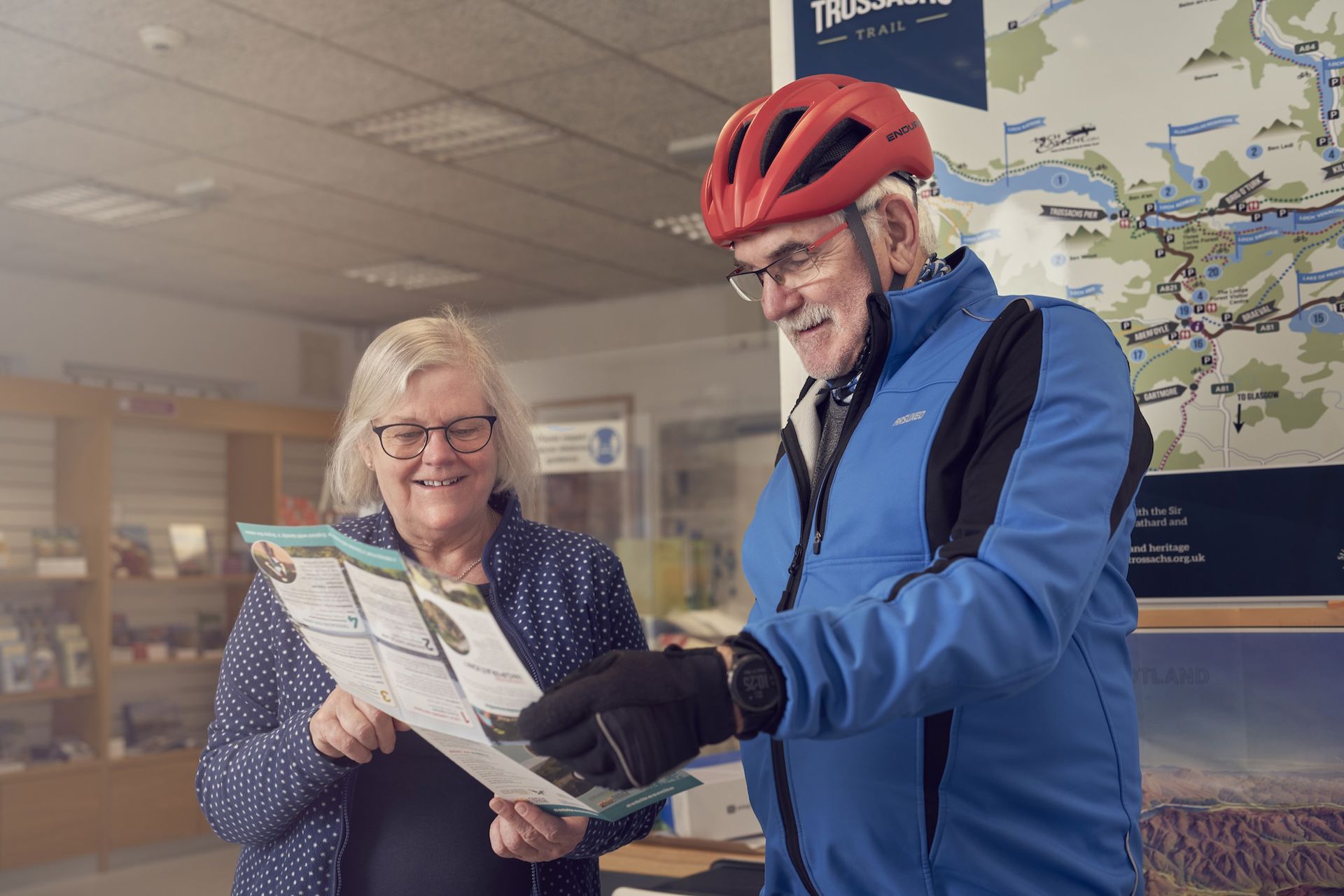
Visitor Information Maps

Visitor information maps have always been popular. SCOTO in partnership with Landmark Press can now produce Be Local branded visitor information tear-off countertop and folded maps for your community. This offer is open to all SCOTO Enterprises as one of your Enterprise benefits.

These highly popular maps can be printed in various sizes and can be
produced with or without advertising. Find out more about the maps here >

Monitoring and Evaluation

Collect visitor feedback and monitor your progress to ensure your centre continues to thrive:

  • Gather Insights: Ask visitors for direct feedback to measure satisfaction and identify areas to improve.

  • Track Key Metrics: Monitor visitor numbers over each month, where guests travel from, overall revenue, and service levels. Volunteer hours can be useful for grants too. 

  • Strengthen Grant Applications: Use this data not only to enhance day-to-day operations, but also to build compelling evidence for future funding applications.